Co je hůlka Kansa?
Hůlka Kansa je klasický ayurvédský masážní nástroj na obličej vyrobený z kovu Kansa, posvátné slitiny mědi a cínu, která se na indickém subkontinentu používá již více než pět tisíc let. V Ayurvedě je Kansa považován za tradičně ceněný kov. Charaka Samhita odkazuje na nádoby a nářadí Kansa jako na prospěšné pro vyvážení Doshas (tří bioenergií, které řídí tělo) a tradiční domácnosti v různých oblastech Indie používají nádoby Kansa k jídlu a pití.
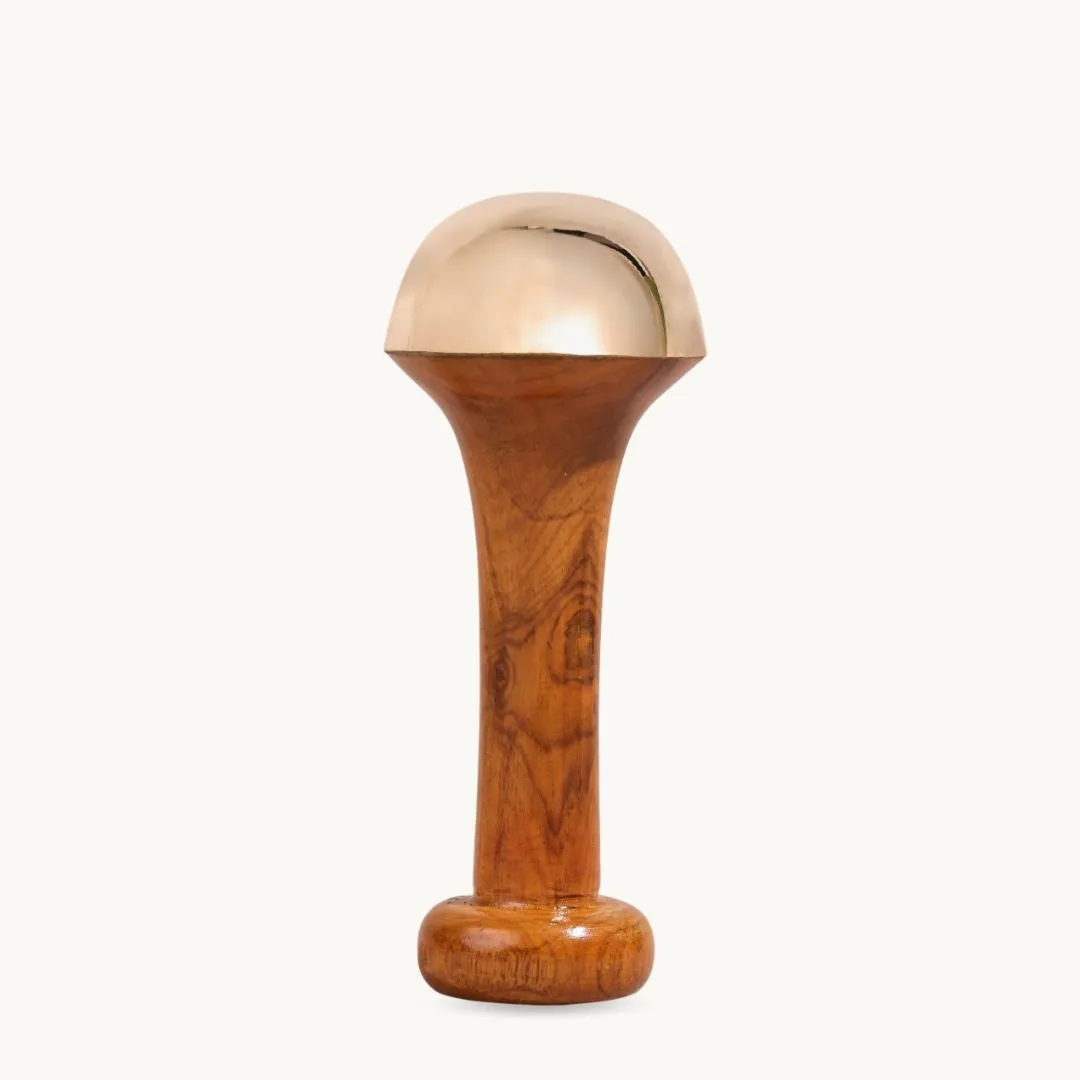
Samotná hůlka je jednoduchá: hladká, kopulovitá hlava Kansa nasazená na dřevěné rukojeti. Když je kov protažen přes kůži olejem, jemně interaguje s přirozenou chemií pokožky. Během používání si můžete všimnout, že se na pokožce objeví našedlý odstín. Jedná se o přirozenou reakci mezi kovem a kyselým zbytkem na povrchu pokožky a snadno se smývá.
Na rozdíl od moderních obličejových válečků vyrobených z nefritu nebo růžového křemene není Kansa hůlka současným wellness vynálezem. Patří do řady ayurvédských nástrojů navržených na základě klasického chápání bodů Marma (centra vitální energie), výživy tkání a řízení Dosha.
Jak funguje hůlka Kansa
Marma Bodová stimulace
Obličej obsahuje 37 ze 107 Marma bodů popsaných v ayurvédských textech. Jsou to křižovatky, kde se setkávají svaly, kosti, nervy a krevní cévy. Sushruta Samhita podrobně popisuje body Marma a identifikuje obličej jako zvláště koncentrovanou oblast. Když se zaoblená hlava Kansa pohybuje přes tyto body jemným trvalým tlakem, tradičně se rozumí, že povzbudí tok Prana (vitální energie) přes tkáně obličeje.
Pitta Zůstatek
Kansa kov se tradičně používá v Ayurveda k odvádění přebytečného tepla z těla. V ayurvédském pojetí to znamená, že nástroj je zvláště vhodný pro vyvažování Pitta Dosha (princip ohně) v obličeji. Mezi známky nadměrného obličeje Pitta patří zarudnutí, citlivost, teplo a reaktivní pleť. Chladivá povaha slitiny mědi a cínu v kombinaci s jemným masážním účinkem se tradičně používá k podpoře klidnějšího a rovnoměrnějšího vzhledu.
Lymfatická podpora
Pomalé, táhlé tahy používané při masáži obličeje Kansa sledují přirozené drenážní cesty obličeje. To je tradičně chápáno jako podpora pohybu lymfy, systému odstraňování odpadních tekutin z těla. Když se lymfa pohybuje efektivně, obličej má tendenci vypadat méně nafouknutý a více definovaný, zejména kolem čelisti a pod očima.
Krok za krokem: Obličejový rituál Kansa
Masáž obličeje Kansa trvá 10 až 20 minut. Může se provádět denně jako součást vaší večerní rutiny nebo dvakrát až třikrát týdně jako specializovaná péče o sebe.
Co potřebujete
- Hůlka Kansa (s kopulí)
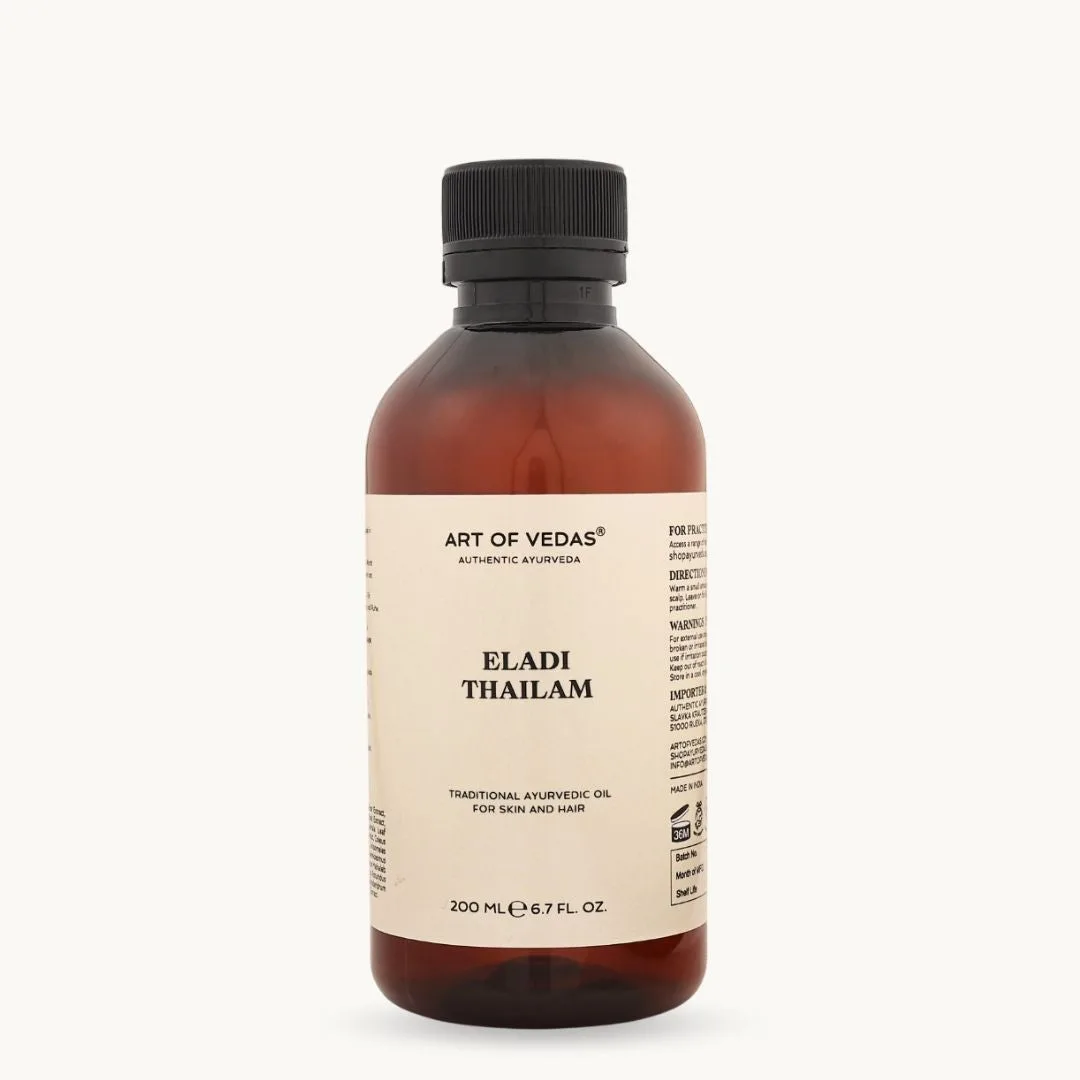
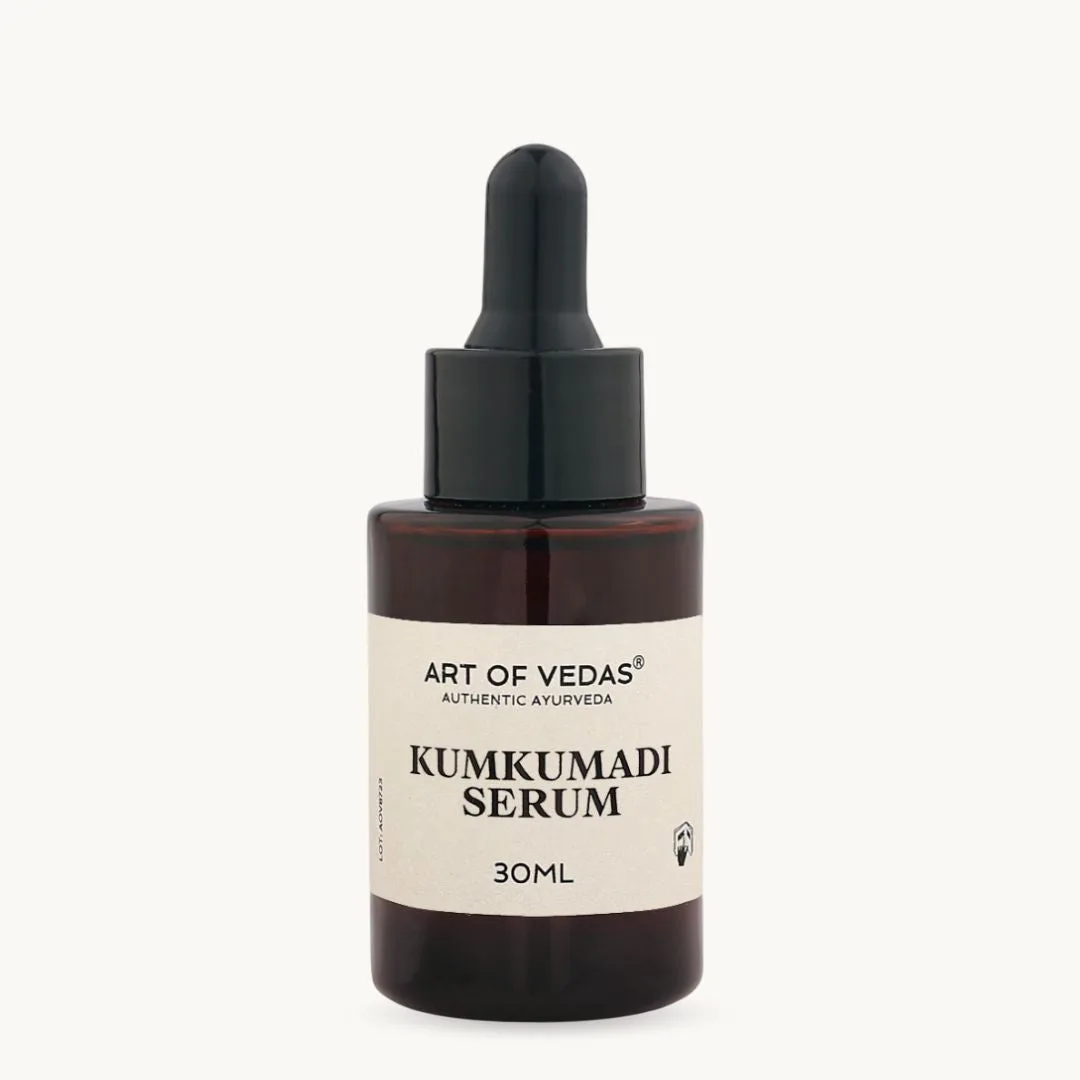
- Obličejový olej nebo Thailam (tradiční ayurvédský olej). Kumkumadi Olej nebo Eladi Thailam jsou klasickou volbou pro aplikaci na obličej
- Čistý, teplý ručník
Příprava
- Důkladně si očistěte obličej teplou vodou
- Naneste 4 až 6 kapek obličejového oleje nebo Thailam na obličej, krk a čelist
- Hůlku Kansa krátce zahřejte v dlaních
Masážní sekvence
- Čelo: Umístěte kopuli do středu čela. Pomocí středního tlaku vytáhněte hůlku směrem ven ke spánku pomalými, rychlými tahy. Opakujte 5 až 7krát na každou stranu
- Chrámy: Držte hůlku u spánku a dělejte malé, pomalé kroužky. Tato oblast odpovídá významnému bodu Marma. Strávit 30 sekund na každé straně
- Oblast pod očima: Velmi mírným tlakem přejeďte od vnitřního koutku oka směrem ven podél orbitální kosti. Nikdy netlačte přímo na oční bulvu. Opakujte 3 až 5krát na každou stranu
- Tváře: Začněte vedle nosu a přejeďte směrem ven podél lícní kosti směrem k uchu. Opakujte 5 až 7krát na každou stranu
- čelist: Začněte u brady a přejeďte podél čelisti směrem k ušnímu lalůčku. Tato oblast často drží napětí. Použijte mírný tlak a opakujte 5 až 7krát na každou stranu
- Brada a ústa: Udělejte malé kroužky kolem brady a koutků úst
- Krk: Dlouhými, jemnými tahy přejeďte směrem dolů od čelisti ke klíční kosti. Pohybujte se vždy po krku směrem dolů a sledujte přirozený směr lymfatického toku
Po masáži
Jemně otřete obličej teplým vlhkým ručníkem, abyste odstranili šedé zbytky. V případě potřeby naneste lehkou vrstvu pleťového oleje. Hůlku Kansa očistěte měkkým hadříkem a jemným mýdlem a před uložením ji zcela vysušte.
Který nástroj Kansa je pro vás ten pravý?
Art of Vedas nabízí tři klasické obličejové nástroje Kansa, z nichž každý je navržen pro specifické použití:
- Kansa Hůlka: Tradiční hůlka s kopulovitým koncem. Nejlepší pro celkovou masáž obličeje, Marma bodové práce a každodenní rituály. Nejuniverzálnější možnost
- Kansa Abhyanga hůlka: Větší design s plochým dnem vhodný pro širší tahy a aplikaci na tělo. Ideální, pokud chcete také použít Kansa na krk, ramena a chodidla
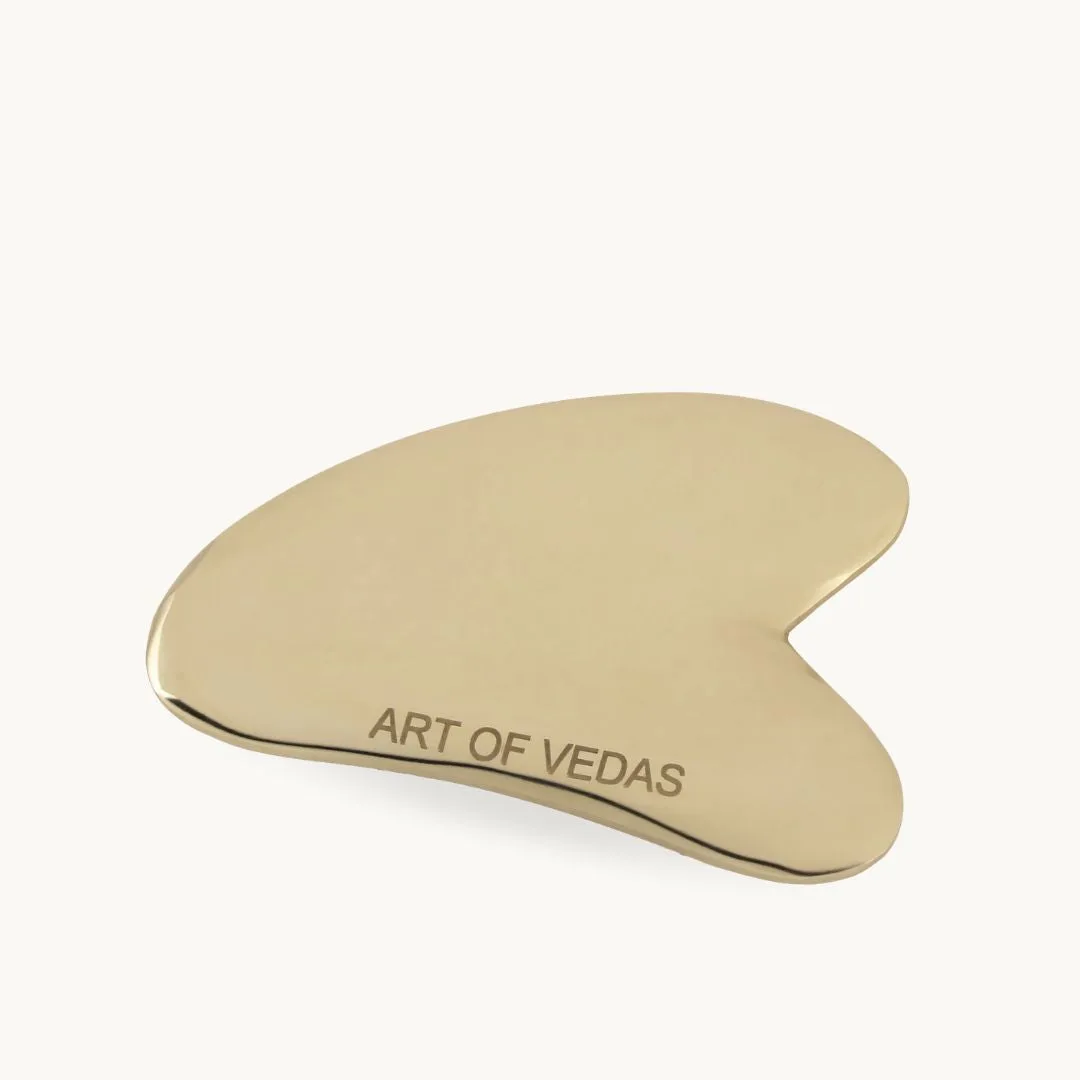
- Kansa Gua Sha: Plochý, tvarovaný nástroj Kansa inspirovaný technikou Gua Sha. Navrženo pro přesné tvarování podél linie čelisti, lícních kostí a obočí
Všechny tři jsou ručně vyrobeny z pravého kovu Kansa řemeslníky v Indii, kteří pracují v rámci tradiční linie zpracování kovů.
Pro koho je hůlka Kansa určena?
Hůlka Kansa je vhodná pro všechny typy pleti a všechny složení Dosha. Je však zvláště vhodný pro:
- Pitta typy pleti: Ti s citlivou, teplou nebo reaktivní pletí, která má sklon k zarudnutí. Kvalita chlazení kovu Kansa je tradičně chápána tak, že podporuje rovnováhu Pitta v obličeji
- Každý, kdo cvičí Dinacharya (denní ayurvédská rutina): Obličejový rituál Kansa přirozeně zapadá do večerní rutiny spolu s Abhyanga (samomasáž teplým olejem) a dalšími klasickými praktikami
- Ti, kteří hledají přístup bez chemikálií: Hůlka Kansa používá pouze kov, olej a dotyk. Neobsahuje baterie, vibrace ani syntetické materiály
Péče o vaši hůlku Kansa
Kansa kov postupem času vytváří přirozenou patinu. To je normální a nemá to vliv na výkon. Pro zachování původního lesku občas vyleštěte směsí citronové šťávy a špetky soli, poté opláchněte a osušte. Skladujte na suchém místě mimo vlhkost.
Při správné péči vydrží hůlka Kansa celý život. Kov nedegraduje a dřevěnou rukojeť lze v případě potřeby vyměnit.
Tradice Kansa na Art of Vedas
U Art of Vedas pochází každý nástroj Kansa přímo od tradičních kovodělných komunit v Indii. Složení slitiny odpovídá klasickému poměru popsanému v textech ayurvédský: přibližně 78 procent mědi a 22 procent cínu. Každý kus je ručně opracován a před odesláním do Evropy zkontrolován.
Pro nové v ayurvédské péči o obličej je hůlka Kansa vynikajícím výchozím bodem. V kombinaci s kvalitním obličejovým Thailam nabízí kompletní klasický rituál, který nevyžaduje žádné speciální školení, žádnou elektřinu a žádné opakované náklady. Jen kov, olej a tradice doteku, kterou Ayurveda vylepšila po tisíciletí.
Prozkoumejte celou řadu Kansa nástroje nebo se dozvíte více o péči o pleť ayurvédský v našem ayurvédský průvodce péčí o krásu.