Classical Ayurvedic preparations are rich by design. A Kuzhambu carries a full complement of botanicals in a dense three-fat base, and for most people that is exactly its appeal. But skin differs, and a preparation that one person uses nightly may not suit another at all. If your skin reacts easily, the sensible path is not to avoid the tradition but to approach it the way careful households always have: a small test first, modest quantities, and honest attention to how the skin answers. This guide covers the patch test, dilution and the signs that a preparation is not for you.
Why rich preparations deserve a first test
A Kuzhambu is a semi-solid preparation, cooked on a base of sesame, coconut and castor fats with herbal decoctions and fresh plant pastes. Unlike a light lotion, it stays on the applied area and absorbs slowly, which means any single application keeps its botanicals in contact with the skin for twenty minutes or more. That extended contact is the tradition working as intended, and it is also the reason a brief first test is worth the small effort. Natural does not mean universally suitable: botanicals are active by nature, and every skin has its own history.
What a patch test gives you
- Certainty about a new preparation before you commit a whole evening to it
- A clear picture of how your skin receives a rich, warming formula
- An early answer at the cost of a fingertip of product and a day of patience
- Confidence to enjoy longer sessions afterwards without second-guessing
- A habit that transfers to every new preparation you ever try, from any tradition
How to patch test, and how to soften a session
Warm a small amount of the preparation and apply a thin layer, about the size of a coin, to the inner forearm. Wipe it off after thirty minutes, then leave the area alone and observe it over the next day. If the skin stays calm and comfortable, proceed to a normal session on a small region. If redness, warmth, itching or any discomfort appears, wash the area with mild soap and water and set that preparation aside; it is not the right one for your skin.
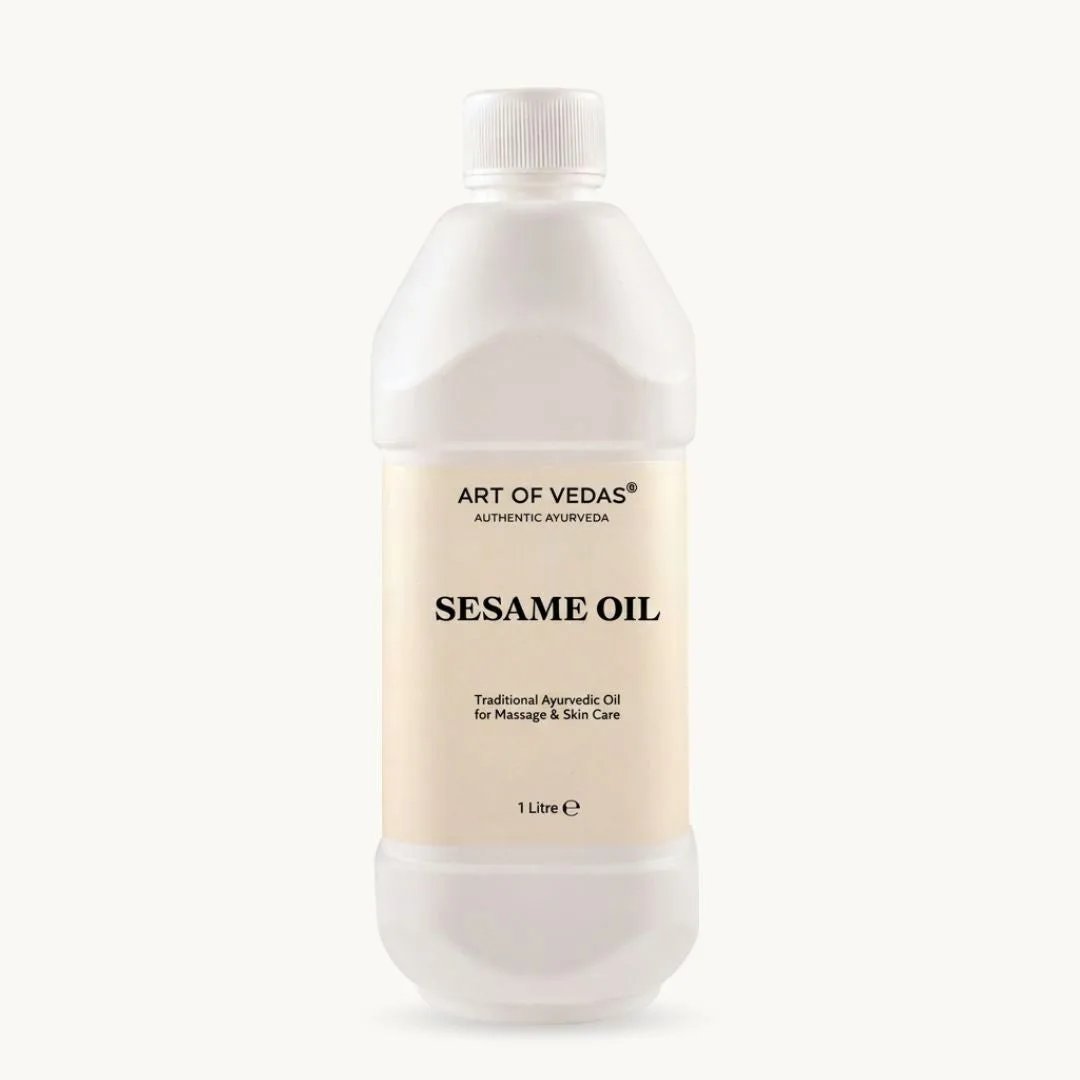
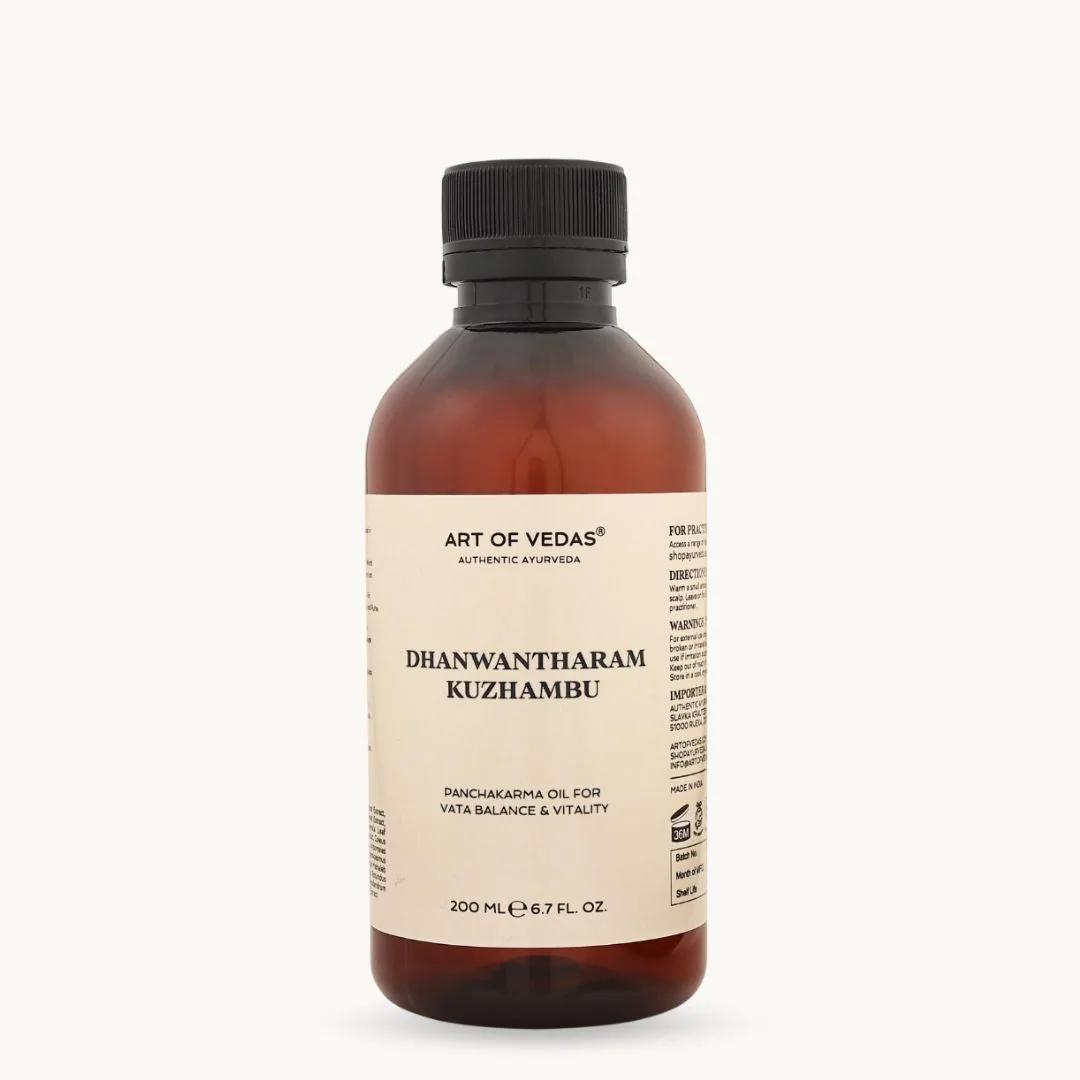
For skin that passes the test but still finds the full preparation intense, dilution is the traditional adjustment. Soften a half-teaspoon of Dhanwantharam Kuzhambu together with a teaspoon of plain cold-pressed sesame oil between your palms and apply the blend instead. The session becomes lighter while keeping its character, and you can adjust the ratio over time. Shorter contact also helps: begin with ten-minute sessions and extend gradually, following the timings in our guide on how to warm and apply a Kuzhambu.
Choosing gentler formulas
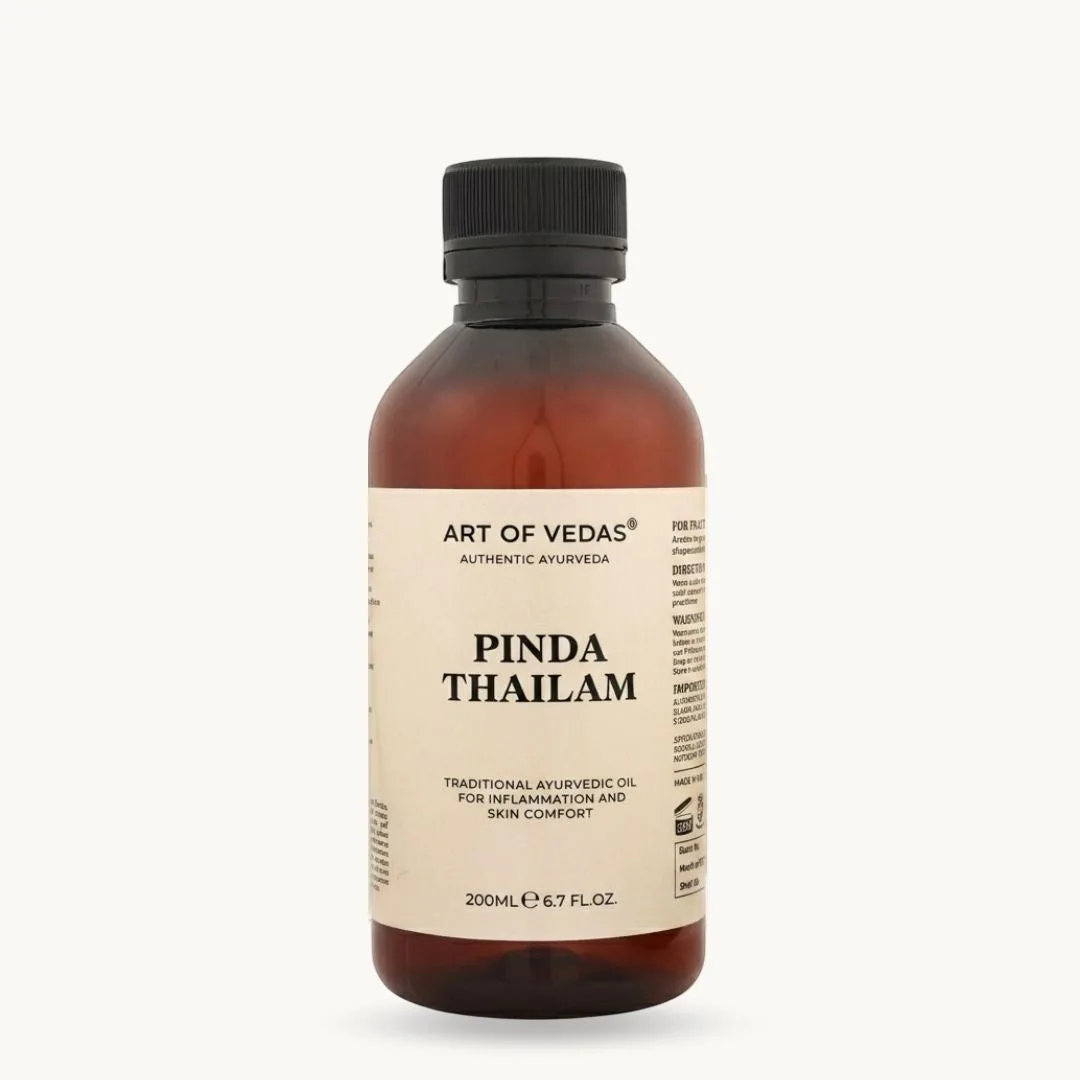
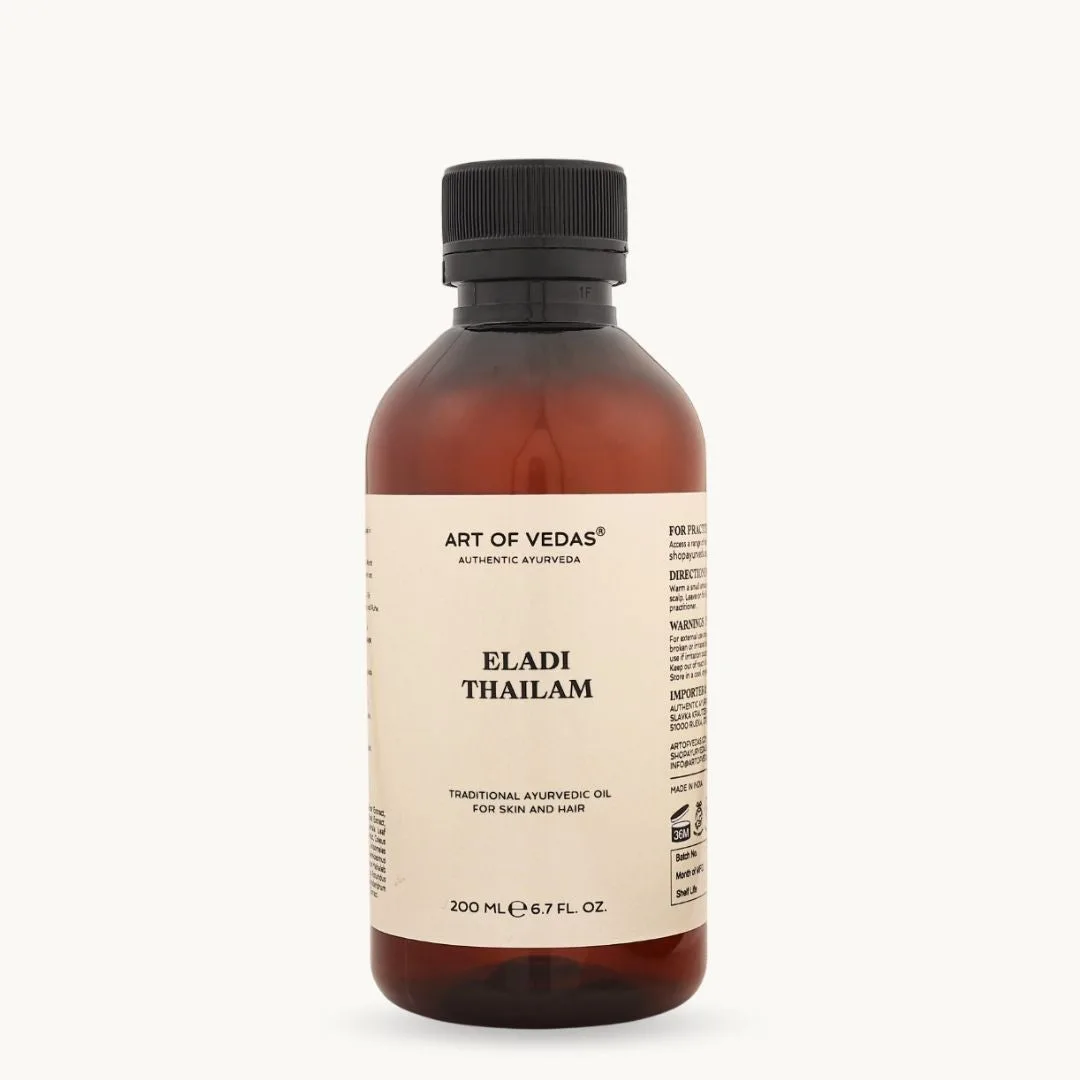
Formulas differ in temperament. Warming lower-body preparations, rich in botanicals such as dried ginger, are the ones most worth testing carefully on reactive skin. At the gentler end of the tradition stand the skin-focused formulas: Eladi Thailam, the cardamom-family oil long used in classical for the care of delicate facial and body skin, is the classical starting point when gentleness is the priority, and our guide on using Pinda Thailam on the skin covers another preparation from the calmer side of the shelf. Begin gentle, learn your skin's answers, and move towards the richer formulas with that knowledge in hand.
Frequently Asked Questions
How long should I wait after a patch test?
Observe the spot for a full day before a longer session. Skin sometimes answers slowly, and the waiting costs nothing.
Can I patch test two preparations at once?
Yes, one on each forearm, provided you note which is which. Test them on the same day and compare calmly.
What are the signs a preparation does not suit me?
Redness that persists, itching, small bumps, unusual warmth or general discomfort at the site. Any of these means wash off, stop and choose differently.
Does diluting with sesame oil change the preparation?
It lightens the texture and reduces the concentration on the skin while keeping the character of the formula. It is an adjustment, not a fault.
My skin is fine with oils but new to Kuzhambu. Test anyway?
Yes. The semi-solid format keeps botanicals in contact longer than a quick oil application, so it deserves its own brief test.
Where can I read more before choosing?
Our Kuzhambu frequently asked questions collects the practical answers in one place and is a good next stop.
This article describes traditional Ayurvedic practice for general information and personal care. It is not medical advice. If your skin reacts strongly or repeatedly, or if you have a known sensitivity, please consult a qualified professional before continuing.